[Home] [Contents] [Figures] [Search] [Help]
[Next Page] [Prev Page] [ Next Chapter] [Prev Chapter]
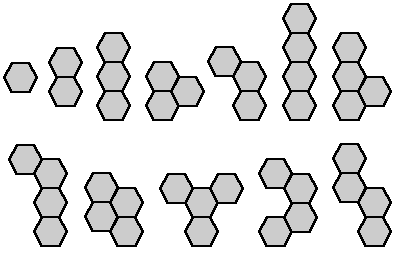
Shown in Fig. 44 are all the ways that hexagonal blocks can be joined, up to size-four. (Incidentally, should the curious reader wish construct a set of hexagon pieces of size-five, one tedious but sure way to do this is to add an extra block to all of the size-four pieces in every possible position and then throw out the duplicates. You should end up with 22 pieces.)
Fig. 44
Table 4
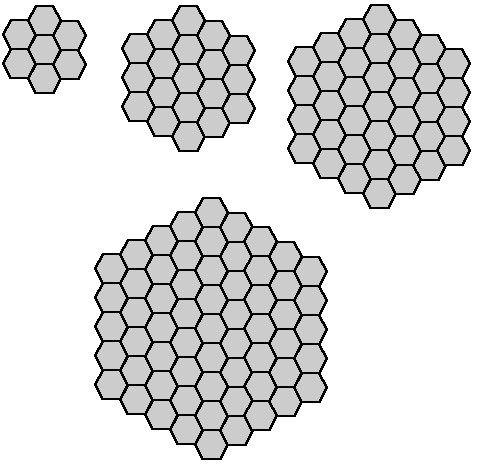
The most obvious problem shapes to construct with such pieces are hexagonal clusters. These are shown in Fig. 45 in increasing size.
Fig. 45
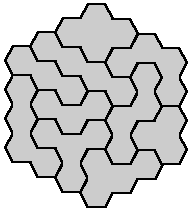
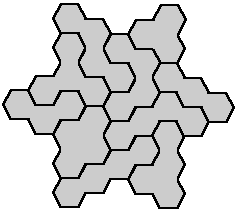
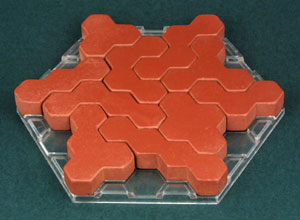
Thus, a set of the three size-three pieces plus the seven size-four pieces just happens to construct the 37-block hexagonal cluster (Fig. 46a). It also constructs a snowflake-shaped figure (Fig. 46b) plus many other geometrical and animated shapes. Beeler found by computer analysis that the hexagonal cluster has 12,290 solutions, and the snowflake pattern (from which a commercial version of this puzzle derived its name) has 167 solutions. The Snowflake Puzzle in Fig. 46c was cast from Hydrastone by Stewart.
Fig. 46c
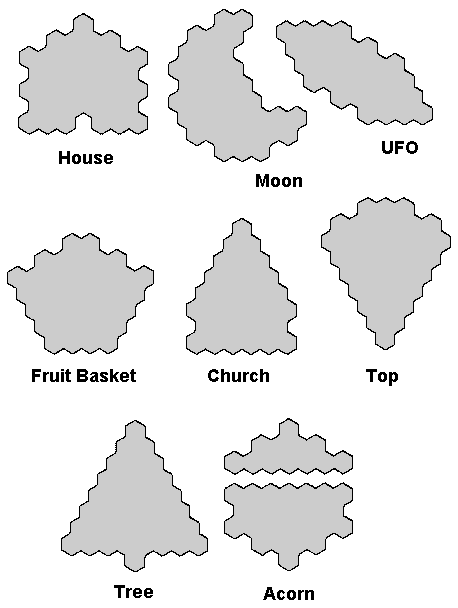
One of the special charms of this set of pieces is that it lends itself so well to creating geometrical, artistic, and animated puzzle problems. Just a few examples taken from the 10-page instruction booklet that came with the Snowflake Puzzle are shown in Fig. 47. The others are left for the reader to rediscover or improve upon. By the way, this is but one more example of a recreation in which young children excel. Many of the design patterns in the Snowflake Puzzle booklet were created by children under ten years of age.
Fig. 47
| ©1990-2005 by Stewart T. Coffin For questions or comments regarding this site, contact the chief metagrobologist:  |
[Next Page] [Prev Page] [ Next Chapter] [Prev Chapter]